Why Your MRI Doesn't Always Match Your Pain
Why Your MRI Doesn't Always Match Your Pain
"Your MRI shows a disc bulge."
"You have arthritis."
"Your meniscus is torn."
"Your rotator cuff is torn."
For many people, these words are frightening. They often leave the doctor's office believing they're permanently damaged, that movement is dangerous, or that surgery is inevitable.
But what if those MRI findings weren't actually the whole story?
Modern research has transformed our understanding of musculoskeletal pain. While imaging is an incredibly valuable medical tool, it was never designed to tell us how much pain someone should have. In fact, countless studies have shown that many people with "abnormal" MRIs have no pain at all, while others with severe pain have relatively normal imaging.
At MVMT MTHD, one of our goals is to help patients understand what imaging can—and cannot—tell us.
Because treating the MRI instead of treating the person often leads to frustration, unnecessary fear, and sometimes unnecessary procedures.
Let's take a closer look.
What Is an MRI?
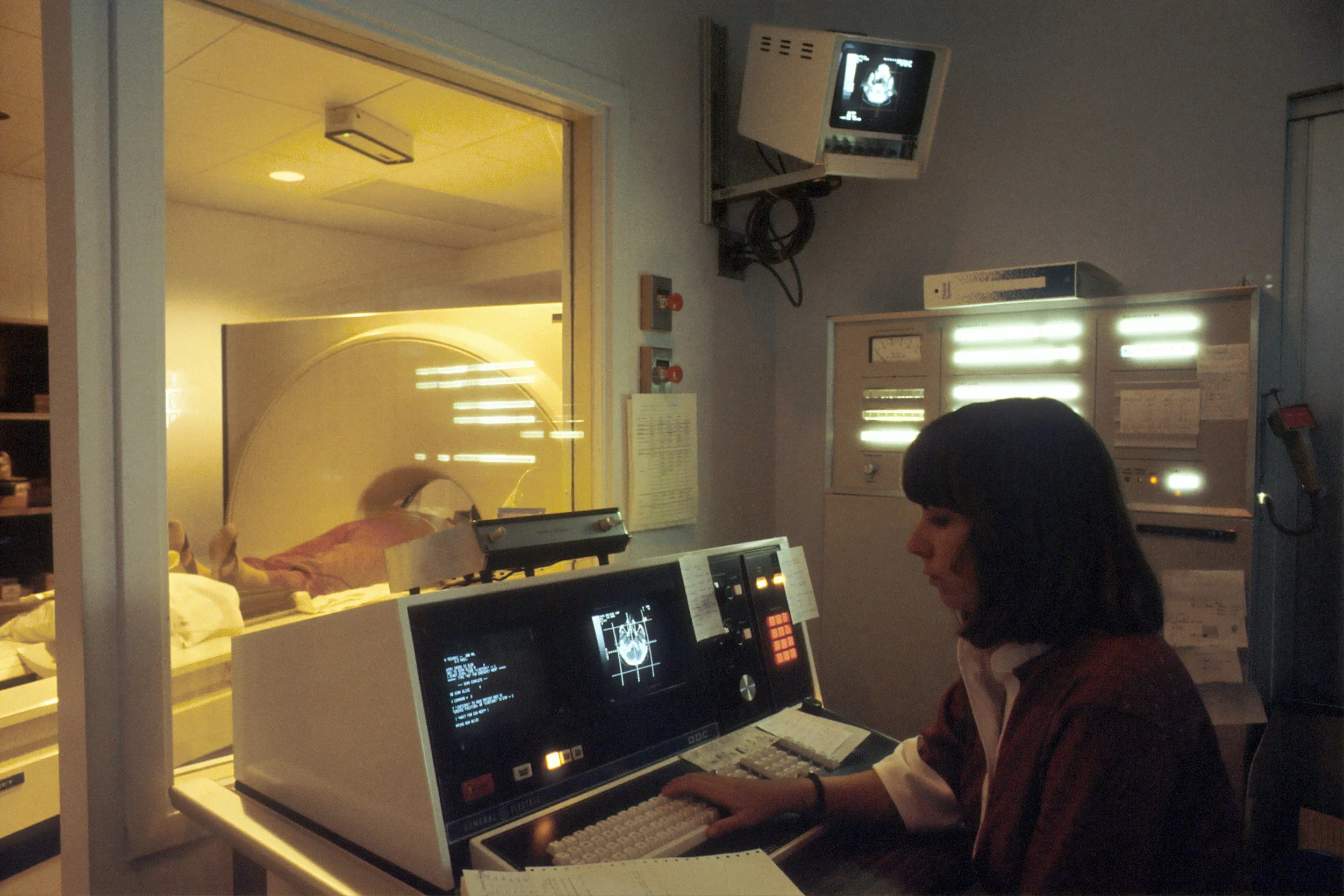
Magnetic Resonance Imaging (MRI) is one of the most advanced imaging tools available.
It allows healthcare providers to visualize:
Muscles
Tendons
Ligaments
Cartilage
Bones
Discs
Nerves
Joint structures
MRIs are incredibly useful for identifying:
Major tendon tears
Ligament injuries
Stress fractures
Bone injuries
Tumors
Infections
Significant cartilage damage
Surgical conditions
Without MRI technology, diagnosing many conditions would be much more difficult. The problem isn't the MRI itself.
The problem is assuming every abnormality is the source of pain.
Your Body Changes As You Age
Wrinkles are normal. Gray hair is normal. Similarly, many musculoskeletal changes are a normal part of aging.
As we move through life, tissues adapt. Discs lose water content. Cartilage changes. Tendons remodel. Bones remodel.
These changes often appear on imaging—even in people who feel fantastic. Finding these age-related changes doesn't automatically mean they're causing pain.
Research Has Changed Everything
One of the most influential studies in musculoskeletal medicine reviewed thousands of MRI scans from people who had no pain whatsoever.
Researchers found remarkably high rates of findings often labeled as "abnormal." For example, completely pain-free people frequently had:
Spine
Disc bulges
Disc degeneration
Herniated discs
Facet arthritis
Shoulder
Rotator cuff tears
Tendinosis
Labral abnormalities
Knee
Meniscus tears
Cartilage defects
Arthritis
Hip
Labral tears
Femoroacetabular impingement (FAI)
Cartilage wear
If these structures alone caused pain, nearly everyone over the age of 40 would constantly be hurting.
Thankfully, that's not the case.
So Why Do Some People Hurt?
Pain is influenced by far more than tissue appearance. Think about two identical cars. One has a small scratch on the bumper. The other has the exact same scratch. One owner doesn't even notice it. The other worries about it every day.
The scratch is identical.
The experience is different.
Your body works similarly. Your nervous system evaluates much more than structural findings.
It considers:
Current tissue health
Previous injuries
Stress
Sleep
Movement habits
Strength
Confidence
Expectations
Overall health
Pain is the result of your nervous system deciding how much protection you need—not simply reading an MRI report.
Pain Is an Experience—Not Just a Picture
An MRI is like taking a photograph of your shoulder or knee.
A photograph tells us what something looks like.
It doesn't tell us:
How strong you are.
How confident you feel.
How well you move.
How much you sleep.
How stressed you are.
How your nervous system is responding.
Those factors can't be captured on an image. Yet they often have enormous influence over recovery.
The Danger of Over-Reliance on Imaging
When patients hear phrases like:
"Bone-on-bone."
"Your spine is crumbling."
"You have the back of an 80-year-old."
they often become afraid to move.
Research has shown these beliefs can actually increase disability.
People begin avoiding:
Walking
Lifting
Exercise
Running
Sports
Playing with their children
Over time this leads to:
Muscle weakness
Reduced endurance
Lower confidence
Increased stiffness
Greater pain sensitivity
Ironically, trying to protect yourself too much can make movement feel even harder.
Movement Is Information for Your Brain
Your nervous system is constantly learning. Every successful movement teaches your brain: "This activity is safe." Every avoided movement can unintentionally reinforce the message:
"This activity is dangerous." One of the biggest goals of rehabilitation is helping patients rebuild trust in their bodies. That doesn't mean ignoring pain.
It means gradually restoring confidence through appropriately dosed movement.
When Does an MRI Matter?
This article isn't meant to suggest MRIs are unimportant. They absolutely matter.
Imaging is essential when someone has:
Significant trauma
Suspected fractures
Major tendon ruptures
Progressive neurological symptoms
Severe weakness
Infection
Tumors
Surgical planning
Unexplained weight loss
Red flag symptoms
In these situations, imaging provides critical information that guides medical care.
The key is understanding that an MRI is one tool—not the entire toolbox.
What We Focus On at MVMT MTHD
Instead of asking only: "What does your MRI show?"
We also ask:
How do you move?
Where do symptoms occur?
What makes them better?
What makes them worse?
What are your goals?
How strong are you?
How well do you recover?
How do you sleep?
What activities have you stopped doing?
Because successful rehabilitation requires understanding the entire person. Not just the image.
A Real-World Example
Imagine two runners.
Both have MRI-confirmed meniscus tears.
Runner A continues training, modifies mileage for a few weeks, completes a strengthening program, and returns to racing pain-free.
Runner B stops running completely because they believe their knee is permanently damaged.
Six months later they have:
Less strength
Less confidence
More stiffness
More pain
The MRI didn't determine the outcome.
How each person's body—and nervous system—adapted played a major role.
The Goal Isn't a "Perfect" MRI
Many patients ask: "Can we make my MRI normal again?"
Often, that's the wrong question.
Instead ask:
Can I walk comfortably?
Can I lift my grandchildren?
Can I return to CrossFit?
Can I surf?
Can I golf without pain?
Can I sleep through the night?
Can I trust my body again?
Function matters more than perfection.
Many elite athletes compete with MRI findings that would alarm the average person.
They succeed because their bodies are strong, adaptable, and resilient—not because every tissue looks perfect on imaging.
Your Body Is Stronger Than You Think
One of the most encouraging findings from pain science is that the human body is incredibly adaptable.
Muscles become stronger. Bones become denser. Tendons remodel. The nervous system becomes less protective. Movement confidence returns.
Healing doesn't always mean removing every structural change. Sometimes it means improving your body's capacity despite those changes.
Key Takeaways
Remember these important points:
MRI findings do not always explain pain.
Many pain-free people have disc bulges, arthritis, tendon tears, and meniscus tears.
Pain is influenced by your nervous system, not just your tissues.
Imaging should always be interpreted alongside your history and physical examination.
Fear created by imaging reports can sometimes slow recovery.
Strength, movement, sleep, nutrition, stress management, and confidence often influence recovery just as much as structural findings.
The goal isn't a perfect MRI—it's helping you return to the life you want to live.
Looking Beyond the Image
At MVMT MTHD, we don't ignore imaging—but we don't let it define you either.
We combine modern pain science with detailed movement assessments, strength testing, mobility analysis, and individualized rehabilitation to create a treatment plan based on you, not just your scan.
If you've been told your MRI explains everything but your recovery has stalled, there may be another piece of the puzzle waiting to be addressed.
Because you are far more than an image.
Ready to Move With Confidence Again?
Whether you've been diagnosed with arthritis, a rotator cuff tear, a disc bulge, or a meniscus injury, your MRI is only one chapter of your story.
Our mission at MVMT MTHD is to help you understand the full picture, build resilience, and return to the activities you love through evidence-based, individualized care.
Schedule your comprehensive movement assessment today and discover what your MRI can't tell you.
References
Brinjikji W, Luetmer PH, Comstock B, et al. Systematic Literature Review of Imaging Features of Spinal Degeneration in Asymptomatic Populations.American Journal of Neuroradiology. 2015;36(4):811–816.
Culvenor AG, Øiestad BE, Hart HF, et al. Prevalence of Knee Osteoarthritis Features on MRI in Asymptomatic Adults.British Journal of Sports Medicine. 2019.
Girish G, Lobo LG, Jacobson JA, et al. Ultrasound of the Shoulder: Asymptomatic Findings in Older Adults.AJR American Journal of Roentgenology. 2011.
Register B, Pennock AT, Ho CP, Strickland CD, Lawand A, Philippon MJ. Prevalence of Abnormal Hip Findings in Asymptomatic Participants.Clinical Orthopaedics and Related Research. 2012.
Moseley GL, Butler DS. Explain Pain Supercharged. NOI Group; 2017.
Butler DS, Moseley GL. Explain Pain. NOI Group; 2013.
Raja SN, Carr DB, Cohen M, et al. The Revised International Association for the Study of Pain Definition of Pain.Pain. 2020.
Louw A, Zimney K, Puentedura EJ, Diener I. The Efficacy of Pain Neuroscience Education.Physiotherapy Theory and Practice. 2016.
Lewis JS, O'Sullivan P. Is It Time to Reframe How We Care for People With Musculoskeletal Pain?British Journal of Sports Medicine. 2018.
O'Sullivan P, Caneiro JP, et al. Back to Basics: Cognitive Functional Therapy.British Journal of Sports Medicine. 2018.